Think of the low-altitude economy as a smartphone. You’ll see immediately where it’s stuck.
Aircraft are the apps on this phone. The thousands of companies building them are the app developers. Delivery, power-line inspection, emergency response and urban air mobility are the apps waiting to go live. It looks busy. But there’s a question no one is answering: who is building this phone’s operating system?
Almost no one. Everyone is building apps; nobody is building the OS. And a phone with no operating system won’t boot, no matter how many apps you install.

Apps decide what you can do. The OS decides whether you can do it safely.
Think back over twenty years of smartphones. Apps came and went — countless hits, countless disappearances. Yet phones kept getting steadier and safer, thanks to the operating system underneath. It decides which apps can install, whether they can use the camera, whether they can run in the background, and whether one crashing app takes the whole phone down with it. It is the order of the entire device.
The sky works the same way. There can be thousands of aircraft types, coming and going. But the layer that lets any aircraft fly safely, in an orderly way, and in compliance needs to exist only once — and the sky can’t go a single day without it. That layer is the operating system of airspace.
What the “sky OS” actually has to do
It’s easy to say “airspace infrastructure is lagging.” It’s rare to hear anyone spell out what that OS actually has to handle. In the language of operating systems, one to one:
- Process scheduling → airspace scheduling and slot allocation: who flies which volume, and when;
- Memory management → airspace resource allocation: airspace is finite — how to partition it and reuse it;
- Deadlock and conflict handling → 4D trajectory deconfliction: compute in the time dimension who would collide, and resolve it before takeoff;
- Permissions → flight approval and compliance: who may fly, whether a plan is compliant, fully auditable;
- System monitoring → real-time situational awareness: complete command of every target’s position, state, and alerts;
- Drivers → heterogeneous aircraft integration: drones, eVTOLs, helicopters — different makers, different models — all able to plug in.
None of this is for one aircraft. It’s for the entire sky. Without it, everything flying above is just “risk that can take off.”
Without it, more aircraft means more danger
Put a thousand drones over a city with no airspace OS, and it’s like sending a thousand cars racing through streets with no traffic lights and no lane markings: approvals chased by hand, conflicts watched by eye, and who is up there — where, and heading where — often discovered only after something goes wrong. In a sky like that, the more aircraft there are, the less anyone dares to let them fly.
With it, everything changes:
- Operators and pilots: file a plan once, get compliance checked automatically, a route in seconds and conflicts resolved before takeoff — no more chasing approvals;
- Aircraft makers: integrate once and fly anywhere, with no re-adapting for every city and every airspace;
- Regulators: who is flying, where, and whether to plan — on one screen, with a full audit trail. You can only govern a sky you can see;
- Public safety: danger computed and defused before takeoff, with geofences guarding airports, crowds and critical sites;
- The airspace: the same sky holds more flights, flown closer together and more safely;
- The industry and its technology: common interfaces and data standards bring aircraft and systems from every maker onto one network, so low altitude finally connects.
Why everyone builds apps and nobody builds the OS
Because apps are visible and demoable — an eVTOL lifts off on its first flight and the whole industry applauds. The OS is invisible infrastructure: slow, hard, standards-heavy and cross-agency, with no spotlight moment. So the spotlight stays on the aircraft, and order in the sky waits for someone to build it.
Who decides the ending
How high the low-altitude economy can fly won’t be decided by whoever builds the flashiest app. It will be decided by how solid the OS underneath is.
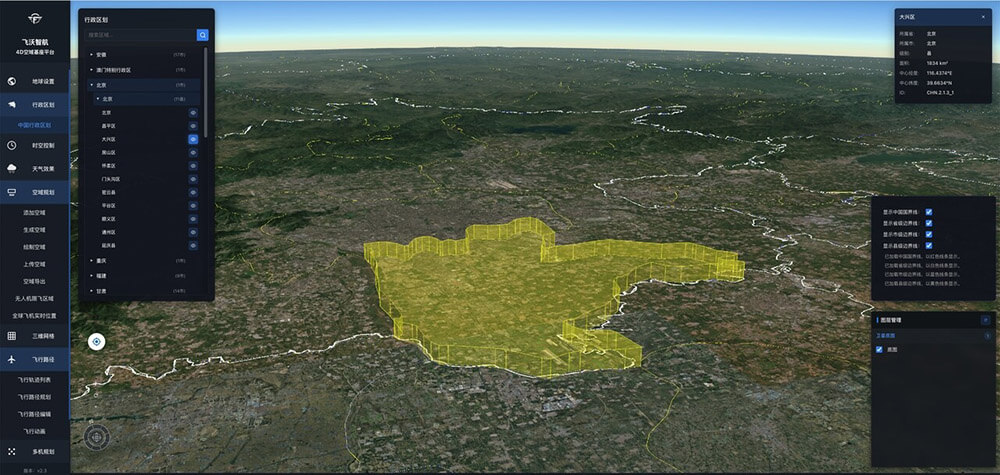
That is what Flyward builds. We don’t build aircraft. We build the operating system of airspace — a 4D airspace traffic management platform that turns airspace scheduling, trajectory deconfliction, approval and compliance, and situational awareness into one foundation any aircraft can run on.
A phone without an operating system is just glass that lights up. A sky full of aircraft without an airspace OS is an accident that hasn’t happened yet. There are enough apps already. It’s time someone built the OS.
Want to see it for yourself? The 4D Airspace Platform is free to try.