Every knot in the low-altitude economy can be explained with two clocks.
One is the “build the aircraft” clock. It runs fast — thousands of airframe makers, riding the mature supply chains of consumer electronics and electric vehicles, can push an aircraft to mass production in a few years. This clock has already reached 95%.
The other is the “govern the sky” clock — digitizing airspace, scheduling trajectories, approving flights, controlling safety. This clock has barely started. Call it 15%.
The industry’s pain isn’t that either clock is wrong. It’s that the two clocks are out of sync — the aircraft are ready, but the sky isn’t.

Why one clock sprints
Building aircraft is visible, demoable, and comes with a ready-made supply chain. An eVTOL lifts off on its first flight and the whole industry applauds. New types arrive one after another, and capacity pours out like a flood.
Yet even the fastest runner gets stuck. Aircraft that already hold a type certificate often still wait for routine routes, scheduling and approvals. They are sprinting toward a sky that isn’t ready to catch them.
Why the other barely moves
Governing the sky is a public-good kind of task: invisible, standards-heavy, requiring cross-agency coordination, moving at the regulator’s pace, with no first-flight glory. No single player can sprint it alone — so it sits at 15%.
That is the cost of the mismatch: aircraft get built, then sit on the ground because they can’t get routine airspace approval or a scheduling slot. A great aircraft stuck on the ground is just an exhibit — and the medicine, rescue and parcels that could arrive by air in minutes are still stuck in traffic.
History only rewards industries whose clocks are synced
Look back: every industry that made it kept its two clocks in step. Highway networks came first, and only then did cars reach every household; rails came first, and only then did trains become the backbone of transport; civil aviation exists today because air traffic control grew up alongside the aircraft. Order in the sky was never something you patched in after aircraft had already multiplied past the point of flying.
For the low-altitude economy to work, the answer isn’t to slow the aircraft clock. It is to start and accelerate the sky clock now, and let the two run side by side.
How to wind the sky clock forward
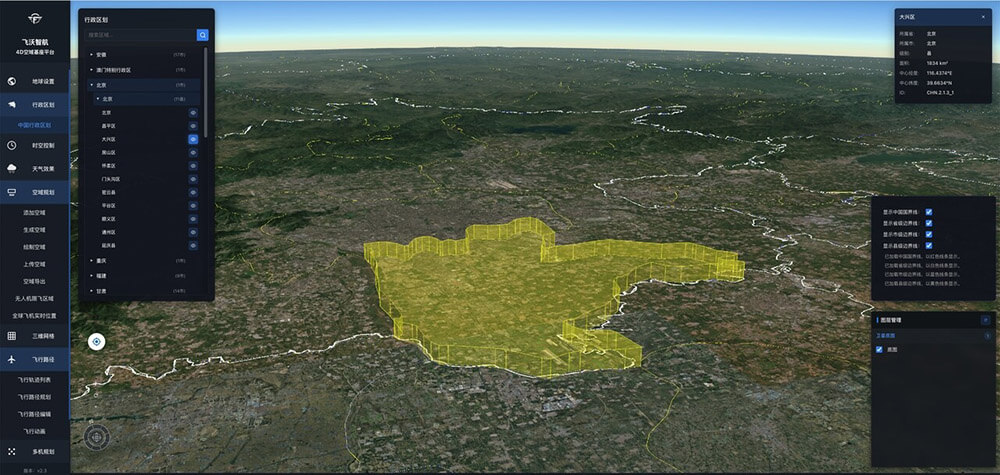
- Make the sky visible: weather, terrain, airspace rules and live flights in one picture — you can’t govern a sky you can’t see;
- Put the rules into the system: flight plans checked for compliance automatically, conflicts computed and resolved before takeoff, approvals cut from days to minutes;
- Fly new routes in a digital world first: new scenarios, routes and contingency plans rehearsed in a digital twin before they go into the real sky;
- Open integration: aircraft of every make and type plug into the same airspace services.
What’s actually counting down
The aircraft clock won’t stop; it will keep ticking. What’s actually counting down is public trust in low-altitude flight. Before the sky clock catches up, a single major accident could put the whole industry on pause. This industry is more likely to be dragged down by its own mismatch than defeated by any technical problem.
That’s what Flyward is trying to do: wind the “govern the sky” clock forward, the one that’s been left behind. Our 4D airspace traffic management platform exists to let the sky keep pace with the aircraft.
Want to see it for yourself? The 4D Airspace Platform is free to try.